
‘Anatomy of Non-fact’ is an art/research project about mis- and over-information in the context of the looming threat of synthetic images, including those generated by AI. The project seeks a definition of the aesthetics of fact via an in-depth analysis of known cases of visual hoaxes, fakes, and conspiracies.
‘AI Hyperrealism’ is the first completed chapter of ‘Anatomy of Non-Fact’. It focuses on the image of the fake Balenciaga Pope, which captured the attention and imagination of many, during the so-called ‘AI-boom’ of 2023.
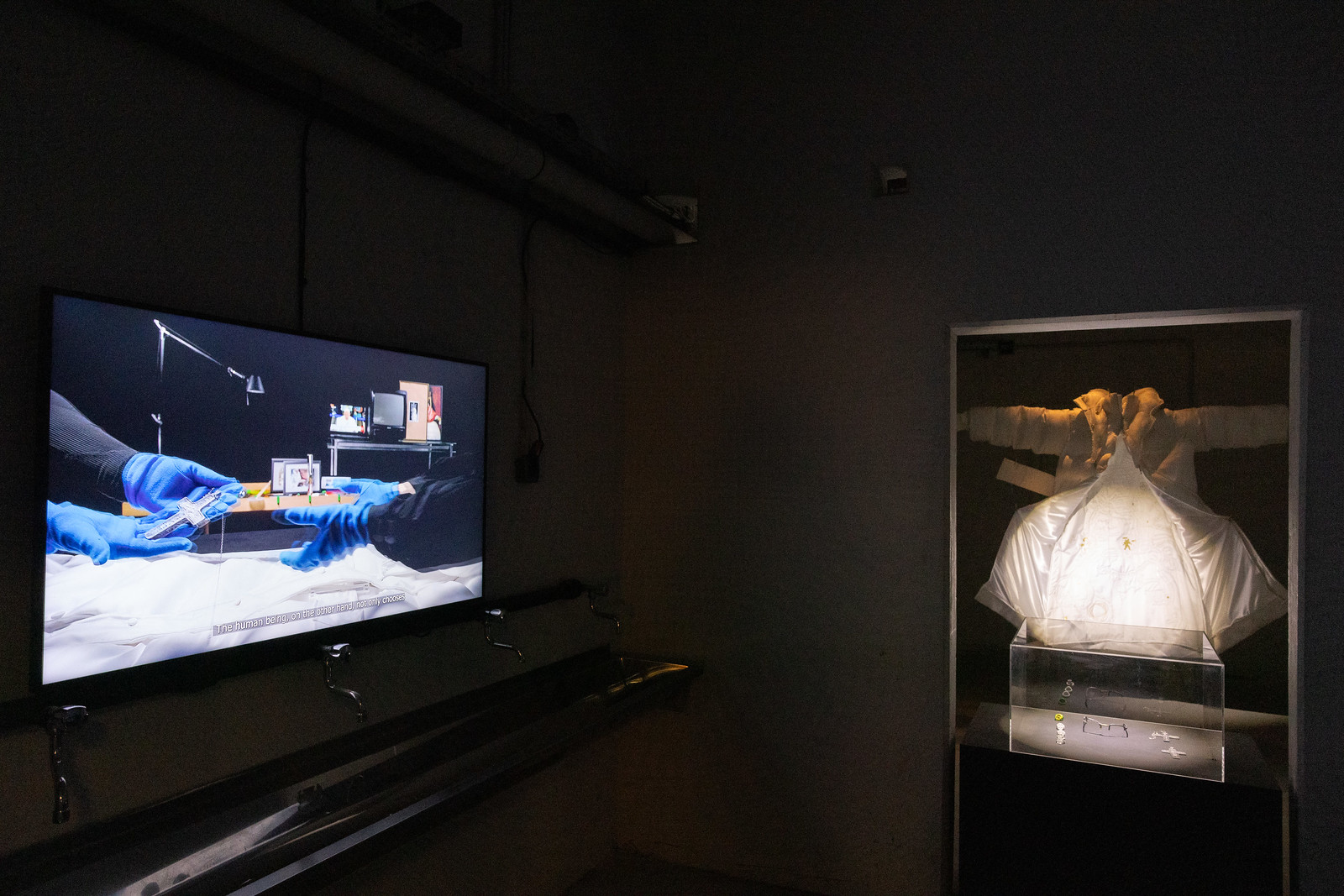
In the 18-minute video, mechanisms of AI generation, visual journalistic languages, and digital cloning are augmented, partly stultified, and reified. A monologue reflecting on the nature of fact, delivered by the Balenciaga Pope, confronts the viewer’s expectation of authorities of truth and photographic image while bending the established notations of visual evidence. The project proposes to start reconsidering the troubling nature of AI-generated and synthetic hoaxes through reconciliation with our visual culture’s relationship to the photographic image. In the video, a series of definitions, old and new, are woven throughout, provoking reframing of existing terminologies related to AI-generated images and naming otherwise undefined phenomena connected to the issues of misinformation.
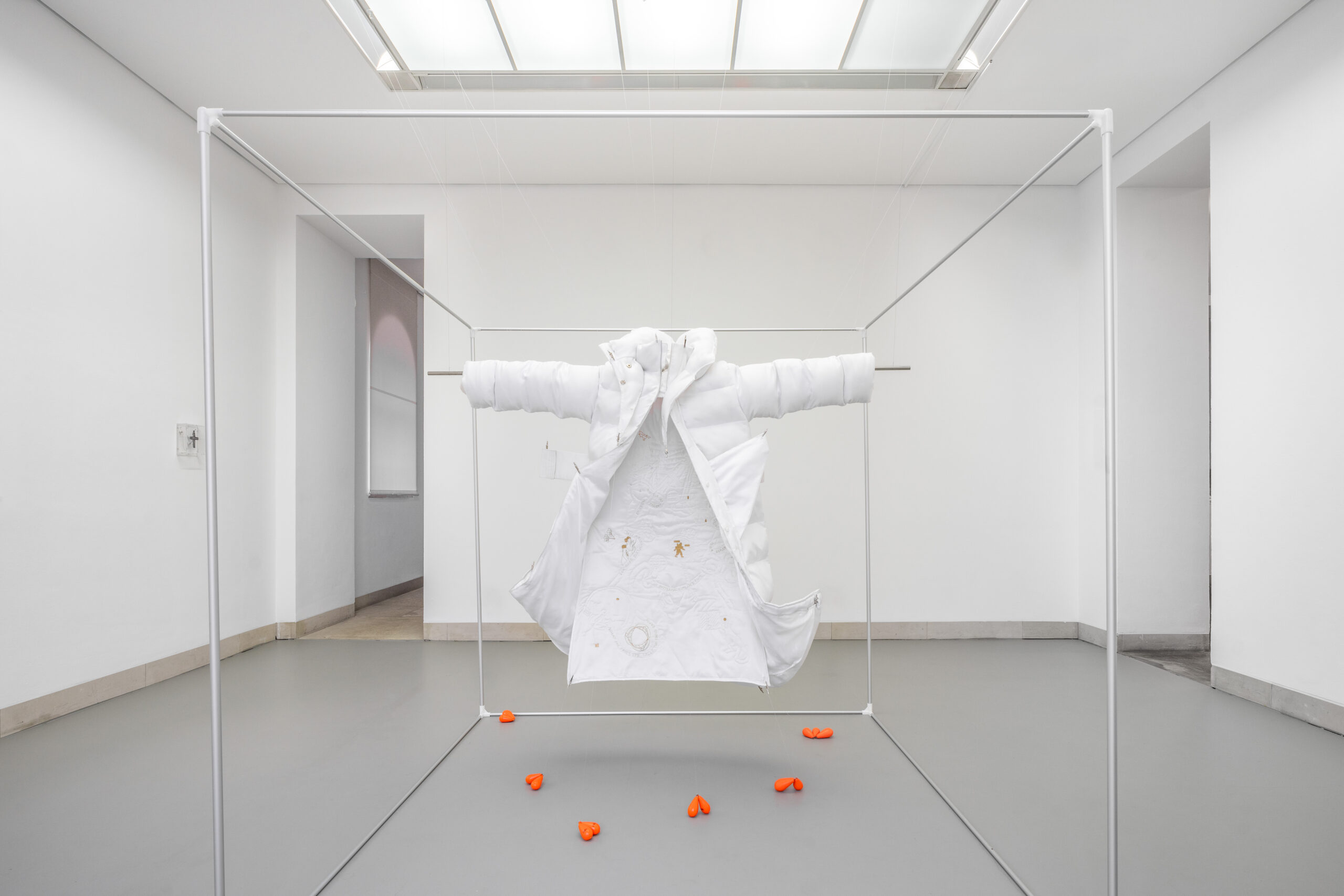
Anatomy of Non-fact: AI Hyperrealism (2024)
Photo: Kilian Blees for Galerie Stadt Sindelfingen
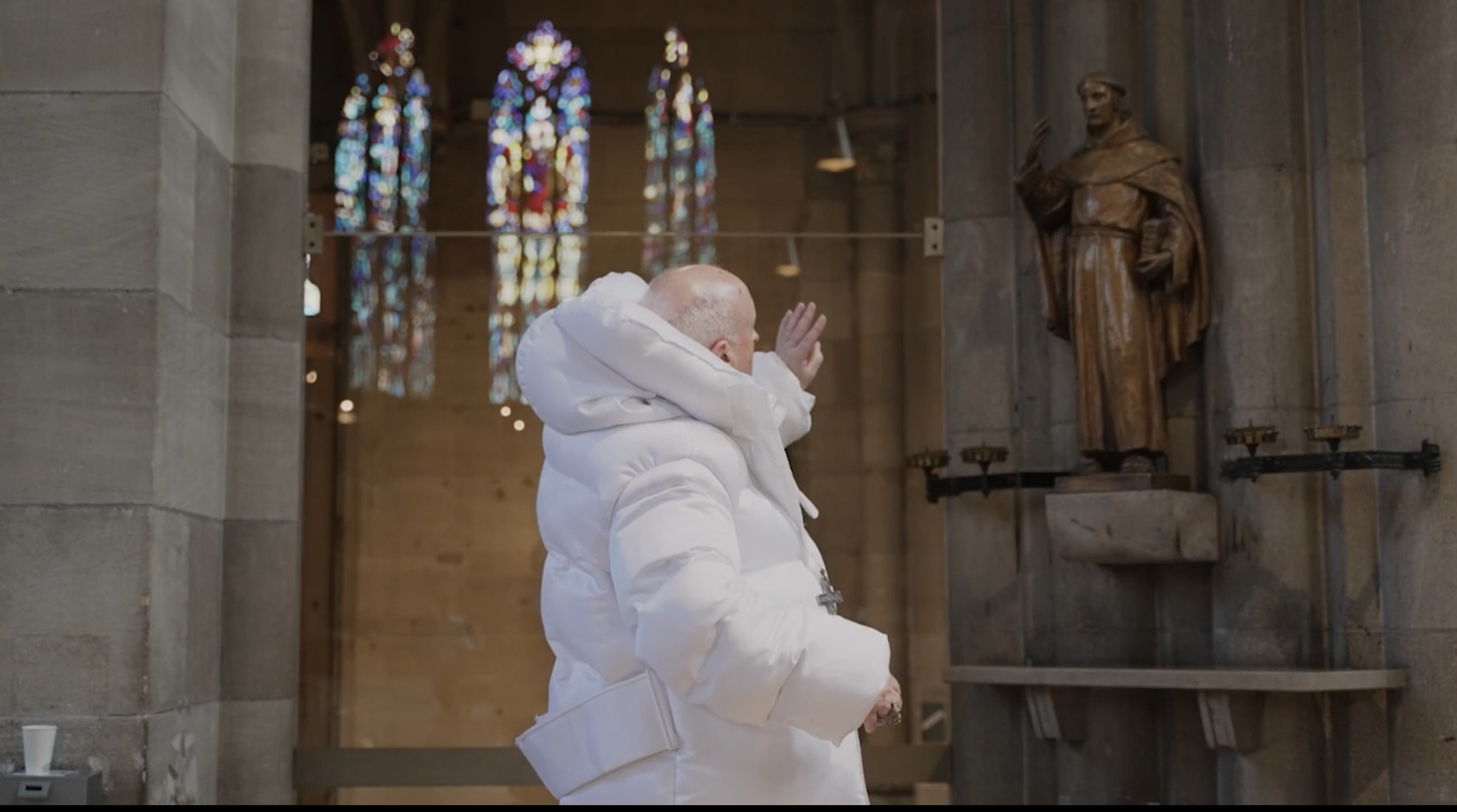
Anatomy of Non-fact: AI Hyperrealism (2024)
Screenshot from the film, courtesy of the artist
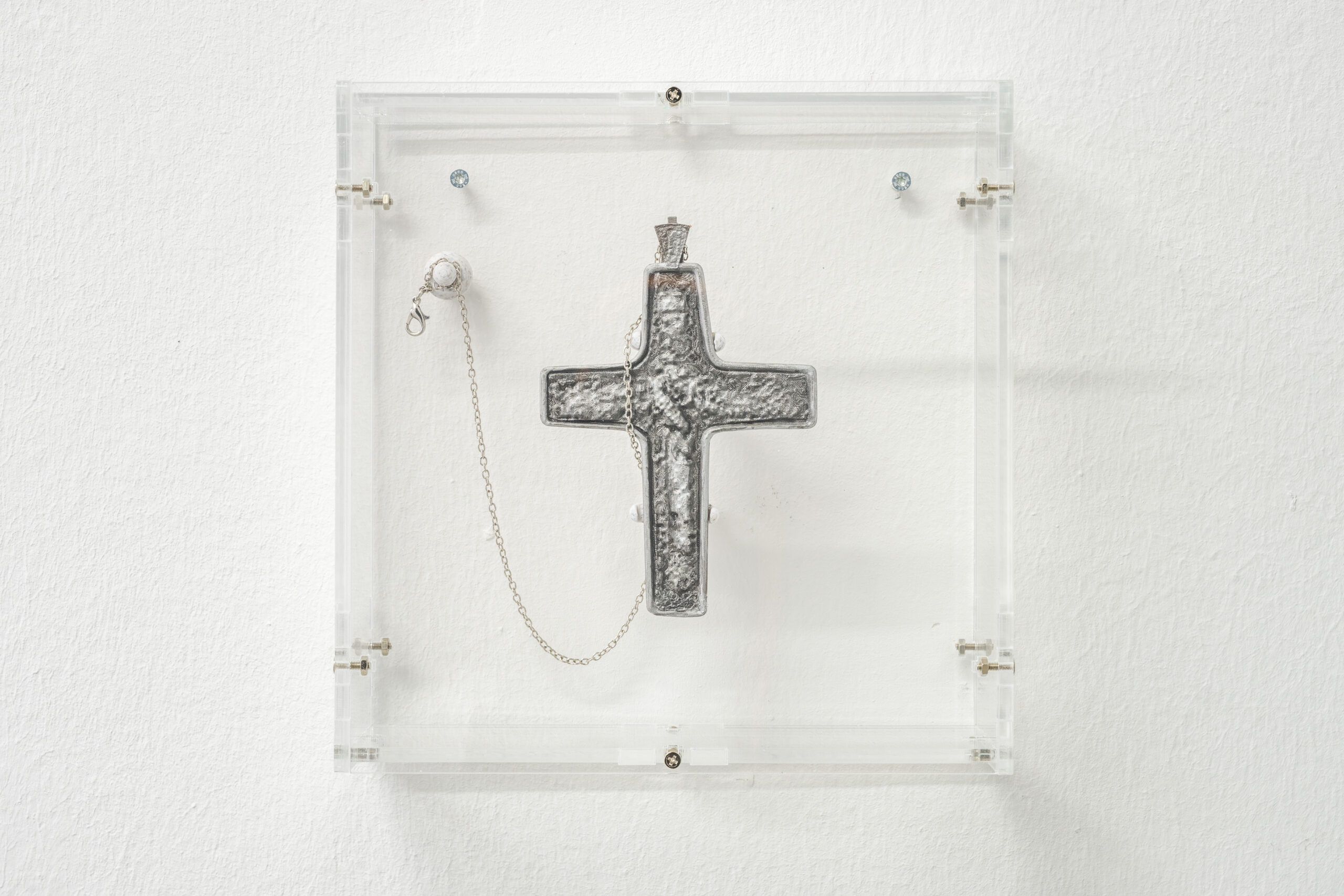
Anatomy of Non-fact: AI Hyperrealism (2024)
Photo: Kilian Blees for Galerie Stadt Sindelfingen
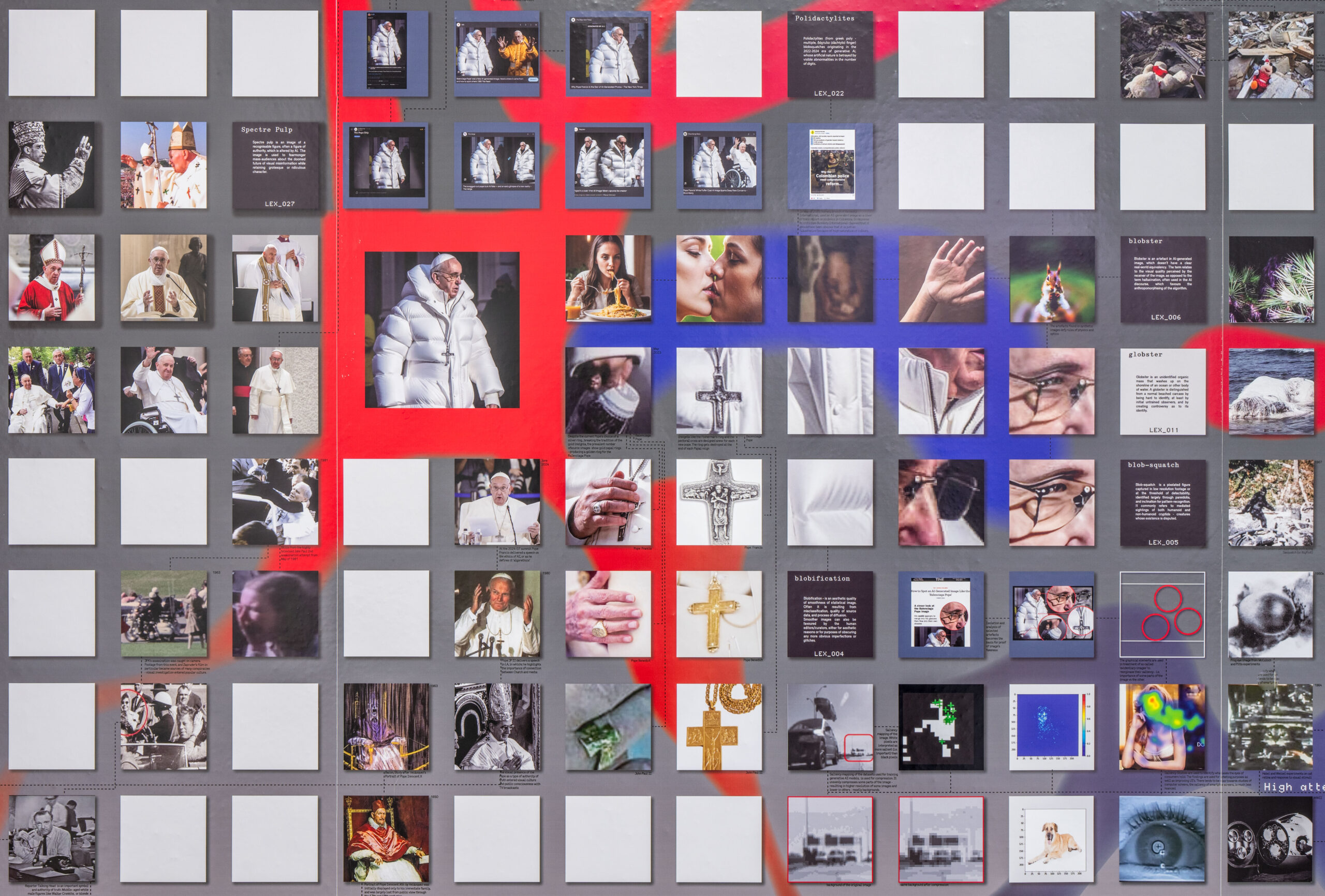
Anatomy of Non-fact: AI Hyperrealism (2024)
Photo: Kilian Blees for Galerie Stadt Sindelfingen
Anatomy of Non-fact: AI Hyperrealism (Ars Electronica Festival, 2024)
Courtesy of the artist
The next part of the ‘What’s New(s)’ residency, hosted by Ars Electronica, will focus on the second chapter in the ‘Anatomy of Non-Fact’ series, tackling the hoax triggered by the image of the fake Pentagon explosion from May 2023. This chapter will focus on the exploration of portrayals of catastrophes, ‘panic images’, and high-frequency trading. In addition to completing this second chapter, a comprehensive visual mapping/cataloguing of all the case studies and connected visual examples and research is being finalised. A workshop format, allowing for education, exploration, and expansion of this mapping is also being developed.
Interview with Martyna Marciniak about chapter I of Anatomy of Non-Fact, AI HYperrealism shown at Ars Electronica Festival 2024.
Essay by Martyna Marciniak for the inaugural issue of _BW_Mag about chapter II of her Anatomy of Non-Fact, Tick, tick, tick…boom.
I began the project by looking closely at AI-generation processes, and the technical architecture behind them. I quickly realised that while photographic realism is largely understood as the only reliable visual evidence, our visual culture hasn’t quite come to terms with photographic lapses, biases and limits. The project asks whether the interrogation of the post-optical (synthetic) imagery through photographic discourse and pre-optical imagery can resolve the mounting tension between faith and truth?
In my research I found that the figure of the pope has historically marked a turn in western visual culture, and ultimately shaped the collective relationship to authorities of truth. ‘It just dawned on me: I should do the Pope’ the author of the Balenciaga Pope image explained following the popularity of the image. It makes a lot of sense that he had this realisation. The loss of papal influence paired with anachronistic persistence of papal fashion and symbolisms pushed the figure of the pope into the shadows of the uncanny, making it the perfect device for expressing the paradoxes of post-optical image.
My goal has been for the project to balance between fake and real, the recognisable and unrecognisable, serious and absurd. Part of the mission of the project is to introduce alternative aesthetics and tone to discussions of misinformation, in order to detach the discourse from the often heavy and seemingly doomed narratives.
Martyna Marciniak
Jury Statement
With Afterfact, Martyna Marciniak expanded our initial question – What’s new/s? – and gave it a compelling direction. Marciniak will develop a ‘digital attention’ guide and toolkit as well as an audio-visual piece investigating the ‘digital aesthetics of fact’. In the information age that blew open the definitions of journalism, information and media, Marciniak’s work at the intersection of human rights research, art, and design is key to any investigation of fact-making mechanisms in digital realms.
Ars Electronica

Martyna Marciniak (PL/DE)
Martyna is a Polish, Berlin-based artist and researcher. Her work is an exploration of visual storytelling and involves animation, film, writing, and model-making.
As a researcher, Martyna uses visual storytelling to draw attention to systemic violence and human rights abuses.
Her art practice relies on speculative fictions and allegory to expose technological and visual biases, while bridging the domains of aesthetics, law, politics, and media theory.
Martyna has worked with Forensic Architecture, Amnesty International, and Human Rights Watch, among other NGOs. Her co-established research group Border Emergency Collective investigated and documented stories of migrating people at the Polish-Belarusian border.
Martyna was an artist in residence at Bauhaus Dessau Foundation and at Akademie Schloss Solitude. Her work has been shown at the Ars Electronica Festival, Galerie Stadt Sindelfingen, Sound Image Culture in Brussels, Warsaw Biennale, Kinema ICON in Bucharest, Haus Gropius in Dessau and deTour Festival in Hong Kong, among others.